
Telling a Story with Interior Design Photography
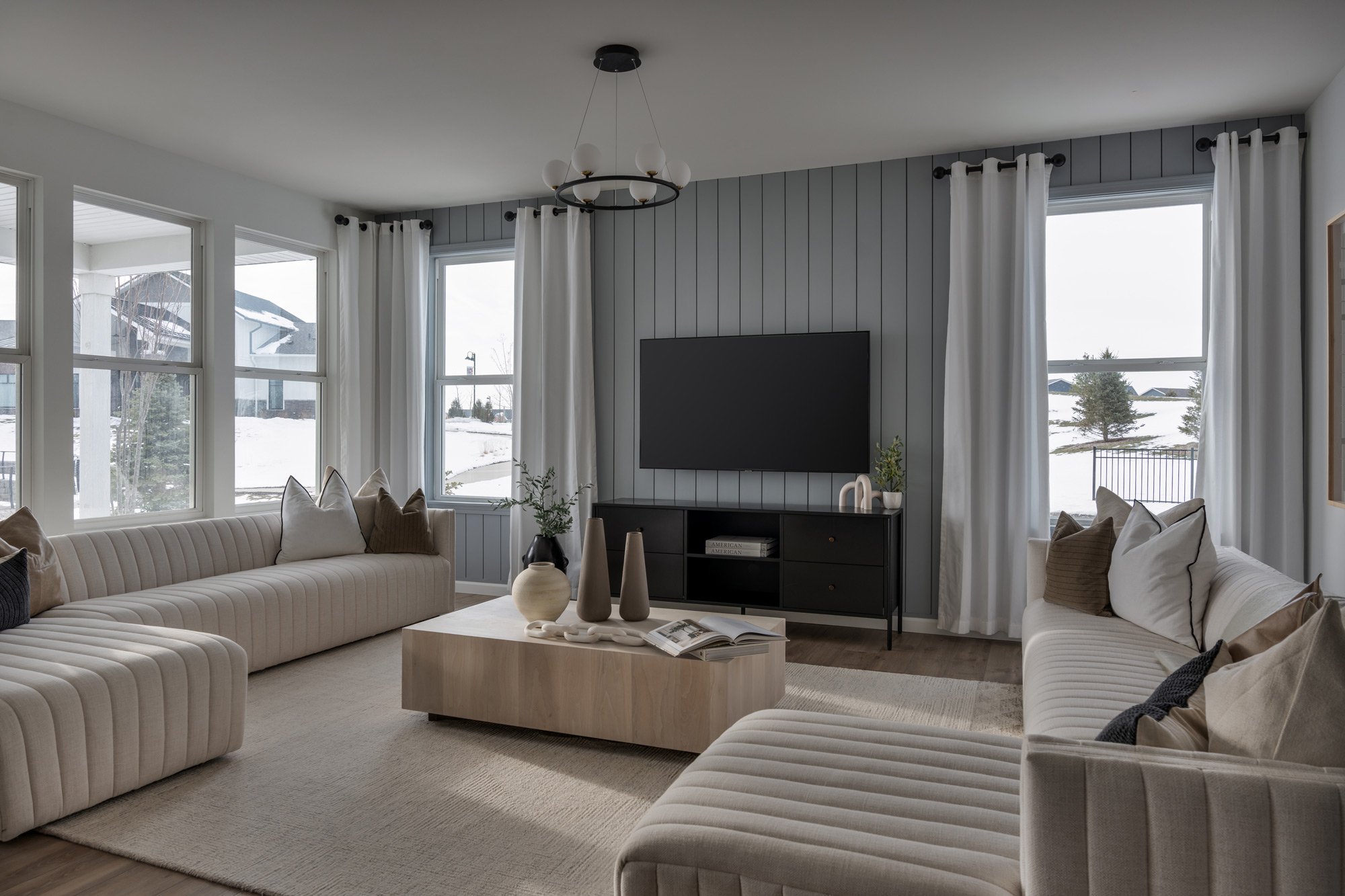
Living room of the model house in Aurora of the National Home Builder.
Interior design photography is about more than capturing a finished room. It’s about revealing how a space functions, how light shapes it, and how design choices connect from room to room.
When photographed thoughtfully, interiors become a visual narrative — one that invites the viewer to move through the home and experience it as it was intended
The Living Room: First Impressions and Flow
The living room often sets the tone for the entire interior. It establishes scale, rhythm, and material language.
In photography, this space requires careful composition — clean verticals, balanced framing, and a perspective that allows the viewer to understand both openness and intimacy. Natural light is used to define volume, highlight textures, and create depth without overpowering the design.
A successful living room image feels welcoming, calm, and intentional.
The Dining Room: Geometry and Connection
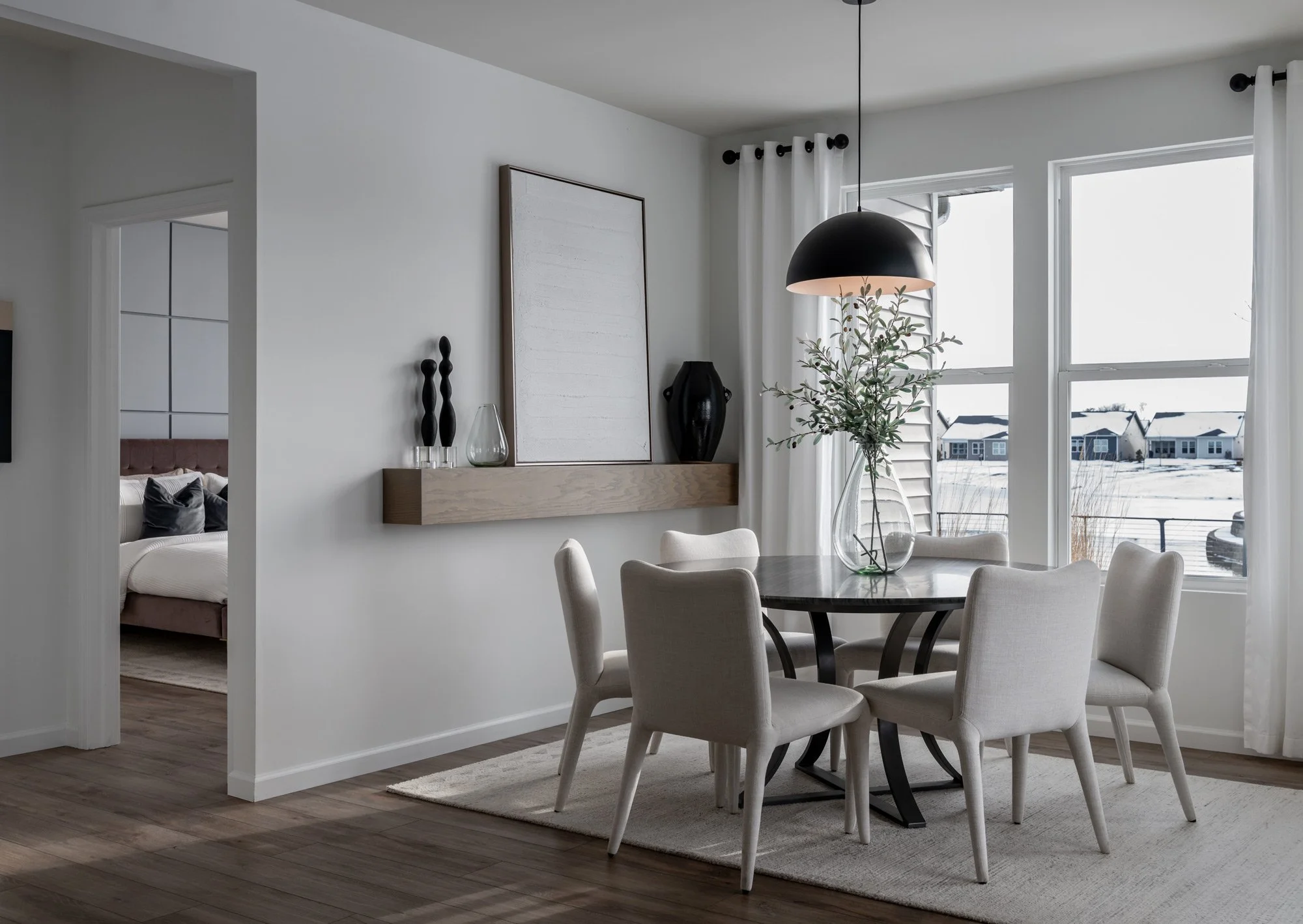
View of the Dining Room design with a sneak to the bedroom.
Dining spaces are about alignment and symmetry — tables, chairs, lighting, and architectural lines working together.
Photographing this room is about honoring geometry and proportion. Thoughtful angles emphasize craftsmanship, while controlled lighting ensures materials and finishes read accurately. The goal is to capture both function and atmosphere — a space designed for gathering and conversation.
The Bedroom: Light, Texture, and Quiet Detail
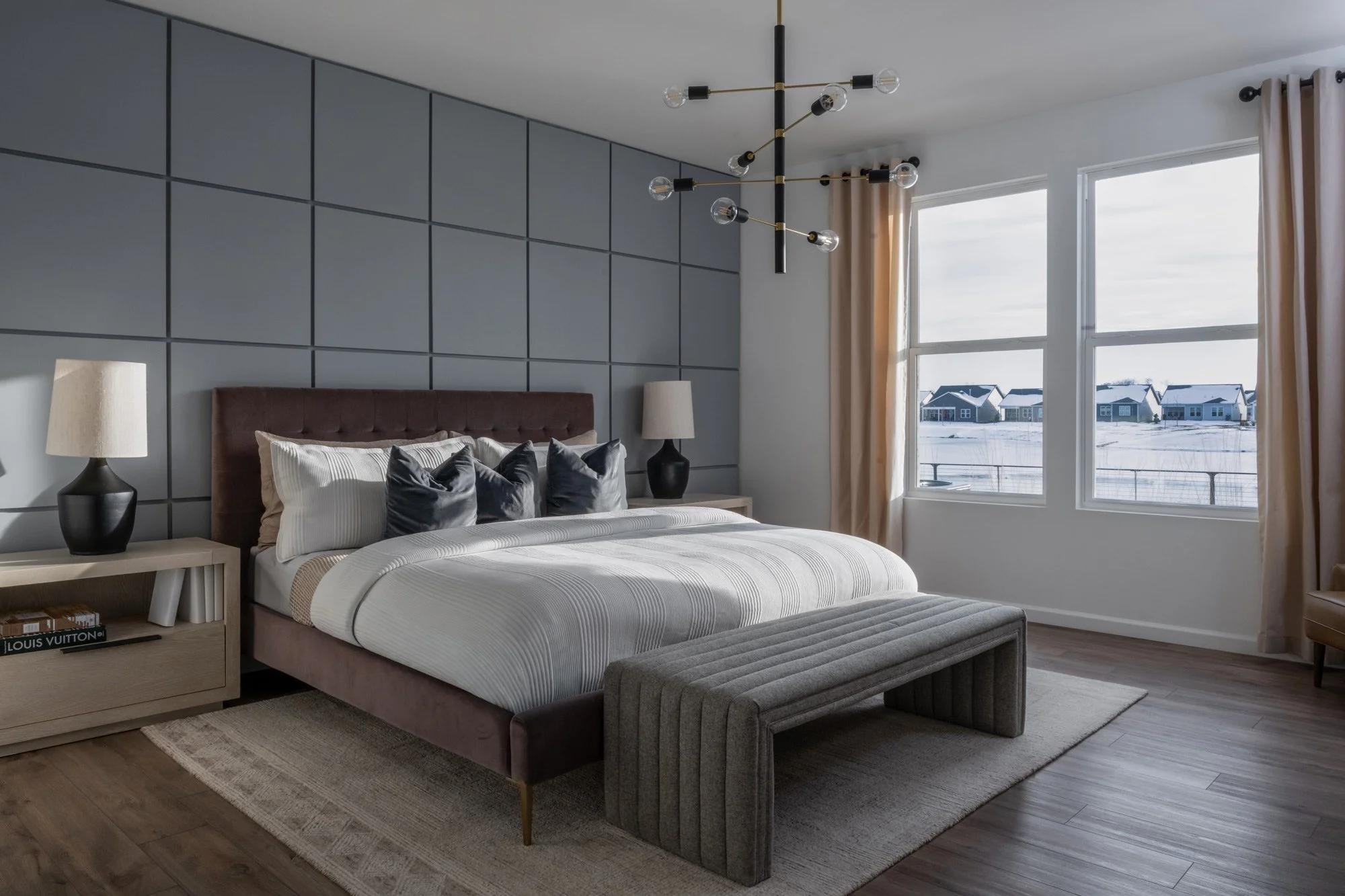
Bedroom Interior with brown and gray details and view to the outside pond in winter.
Bedrooms are intimate by nature, and photography should reflect that sense of calm.
Soft natural light plays a critical role here, revealing fabric textures, wall finishes, and subtle color transitions. Composition focuses on balance and simplicity, allowing the design to breathe without distraction.
A strong bedroom photograph feels serene, personal, and timeless.
Design Consistency Across the Interior
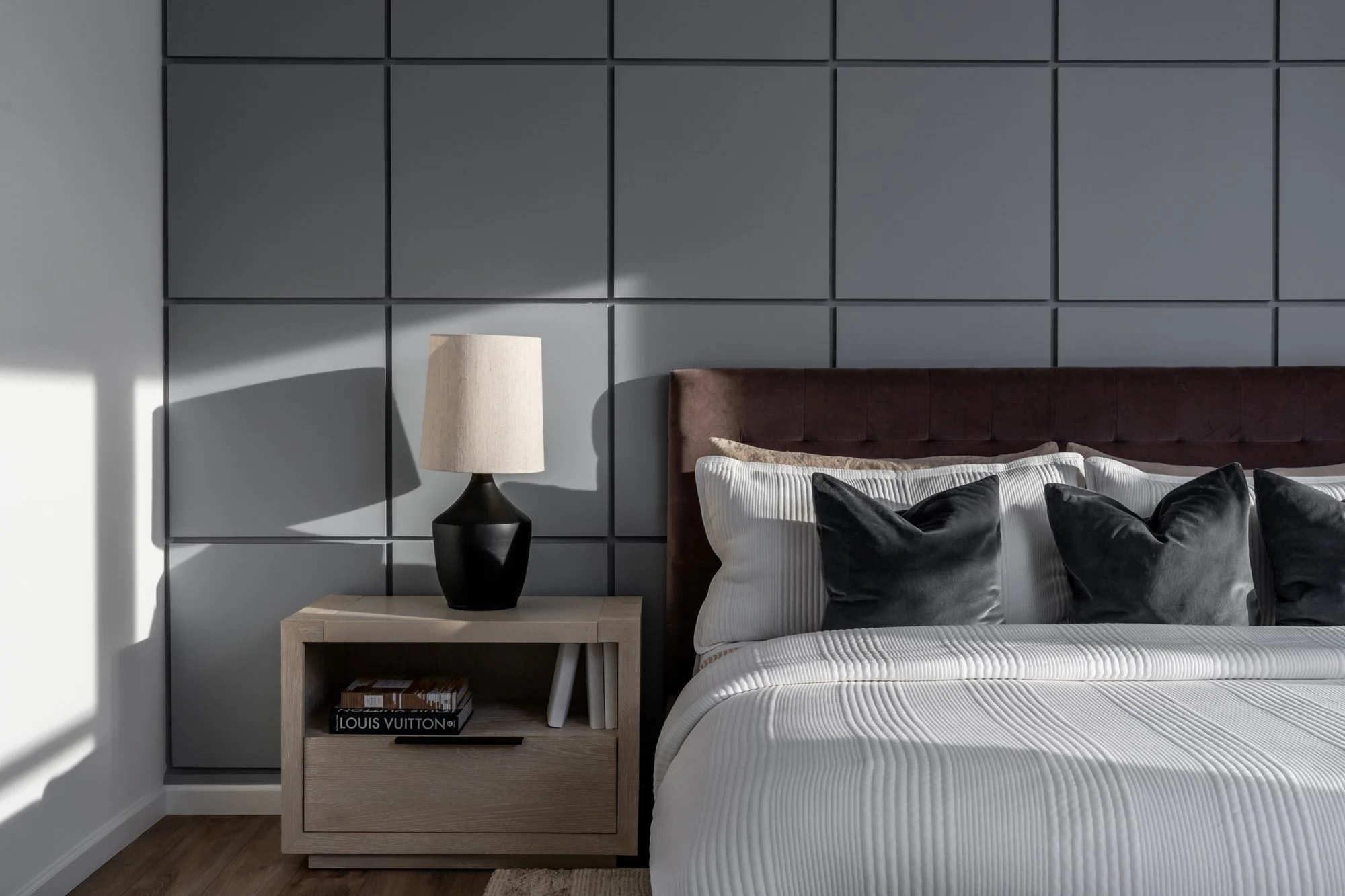
Vignette of the bedroom design.
Beyond individual rooms, interior photography should communicate continuity.
Materials, color palettes, and architectural details are intentionally repeated throughout a home. Capturing these connections helps viewers understand the project as a cohesive whole rather than a collection of isolated spaces.
This is where storytelling becomes essential.
When Motion Completes the Narrative
For larger or more layered interiors, motion can add depth to the story. Subtle camera movement or short walkthroughs help reveal spatial relationships and flow — especially valuable for designers, builders, and developers presenting projects to clients or publications.
When used with restraint, motion enhances clarity without overshadowing design.
Why This Matters
Interior photography is not just documentation — it is a long-term asset.
High-quality images elevate portfolios, support press features, attract refined clients, and preserve the design under its best light. Each photograph should communicate intention, craftsmanship, and value.
Final Thought
Every interior tells a story.
Great photography ensures it’s told clearly, beautifully, and with purpose.
About My Work
I work with interior designers, architects, and builders who value thoughtful design and precise visual storytelling. Through a careful balance of light, composition, and timing, I create images that reflect the true character of a space — not just how it looks, but how it feels.
Each project is photographed with intention, respect for design, and attention to detail.
Photos Mersudin Velic, Architectural & Interior Photographer/ CEO of Urban Media Chicago